

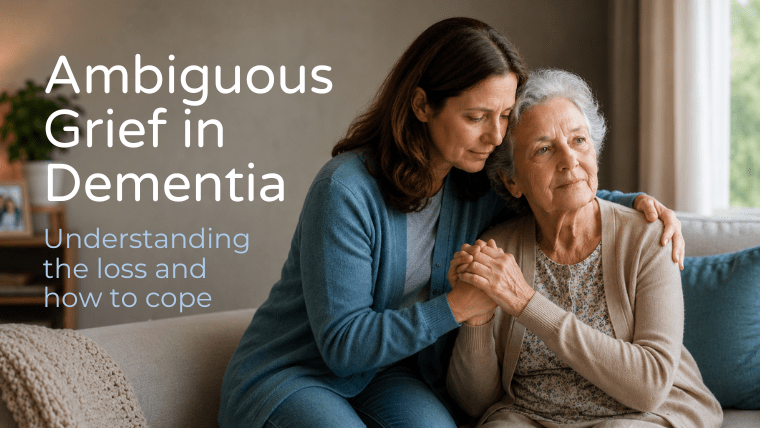
Ambiguous Grief in Dementia
Understanding the Loss and Finding Ways to Cope
When a loved one is diagnosed with dementia, it’s not uncommon for family members and friends to experience a unique kind of grief – one that begins long before they lose the person physically. Ambiguous grief – also known as ambiguous loss – occurs as the relationship changes along the dementia journey.
Although the person is still here, their memories are fading, their personality may change and communication often becomes more difficult, which understandably impacts those around them.
Ambiguous grief can be confusing, isolating and emotionally exhausting because there is no clear beginning or end to the grieving process. Let’s explore what ambiguous grief is, why it happens and how families can cope while continuing to support the person they love.
What is ambiguous grief?
Ambiguous grief describes the sense of loss that occurs when someone is physically present but displaying changes, either psychological or emotional.
Families of someone with dementia may feel they are slowly losing the person they once knew, even though they continue to spend time together. This loss happens gradually rather than all at once, making it difficult to process.
Many family caregivers describe grieving shared memories that their loved one can no longer recall, conversations that once flowed naturally and plans that may no longer happen.
These feelings are entirely normal and experienced by a great many families affected by dementia.
Why is ambiguous grief so difficult?
Unlike bereavement after death, ambiguous grief doesn’t have a clear end point. Others may not acknowledge that loss is taking place; there is no recognised mourning period and no funeral to provide solace and closure.
It’s common for families experiencing ambiguous grief to find themselves balancing conflicting emotions, such as:
- Love and sadness
- Hope and acceptance
- Gratitude and frustration
- Compassion and exhaustion
- Joy in the good moments alongside grief for what has changed
Then there’s the feeling of guilt for grieving a loved one who is still alive. Some people may feel this grief is a sign they love the person less when, in reality, it is simply a reflection of the emotional impact of dementia.
Signs you may be experiencing ambiguous grief
Everyone experiences grief differently, but common signs include:
- Feeling emotionally overwhelmed or exhausted
- Missing the person they used to be
- Feeling isolated or misunderstood
- Difficulty accepting ongoing changes
- Anxiety about the future
- Guilt for feeling sad or frustrated
Understanding that these feelings are normal and valid is central to being able to manage them.
How to cope with ambiguous grief
Although ambiguous grief cannot be erased, there are healthy ways to manage it while continuing to care for your loved one.
Acknowledge your feelings
There is no right or wrong way to feel. Giving yourself permission to grieve can reduce feelings of guilt and help you process difficult emotions.
Focus on the present
Rather than comparing your loved one to how they used to be, try to appreciate meaningful moments as they happen, whether it’s a fun activity or simply sitting together and listening to the birds sing.
Talk openly
Speaking with other family members, friends, support groups or professionals can help you feel less alone. Many family carers find comfort in talking with people who understand the realities of dementia.
Take care of yourself
Caring for someone with dementia can be emotionally demanding. Make time for activities that help you recharge, such as going for a walk, meeting friends, exercising or just relaxing with a cuppa and a book. Self-care isn’t selfish – it’s absolutely necessary.
Accept support
Family members, friends and professional dementia care providers can all help ease the pressure, giving you valuable time to rest and focus on your own wellbeing.
Celebrate moments of connection
Although dementia changes relationships, meaningful connections can still exist. A shared laugh, holding hands, looking through photographs or listening to favourite songs can all strengthen emotional bonds.

You’re not grieving alone
Ambiguous grief is one of the least talked about aspects of dementia, yet it affects countless families. Feeling sadness for what has changed doesn’t diminish the love you have for your loved one – quite the opposite: it reflects just how deeply you care.
Acceptance doesn’t mean giving up hope. Instead, it means learning to embrace the person they are today while honouring the life and memories you’ve shared together.
At Ambiance Care, we understand that dementia affects the whole family. Our compassionate dementia homecare team supports families at every stage of the dementia journey, providing practical assistance, reassurance and companionship that helps everyone feel less alone – call us on 0161 537 0983 or email enquiries@ambiancecare.co.uk.