

Dysphasia vs dysphagia in dementia
Dysphasia and dysphagia may sound similar, and they’re often confused – especially when both occur in someone living with dementia – but they’re actually two very different medical conditions. Let’s take a closer look at each condition, how they differ, and why they’re both common in individuals with dementia.
What is dysphasia?
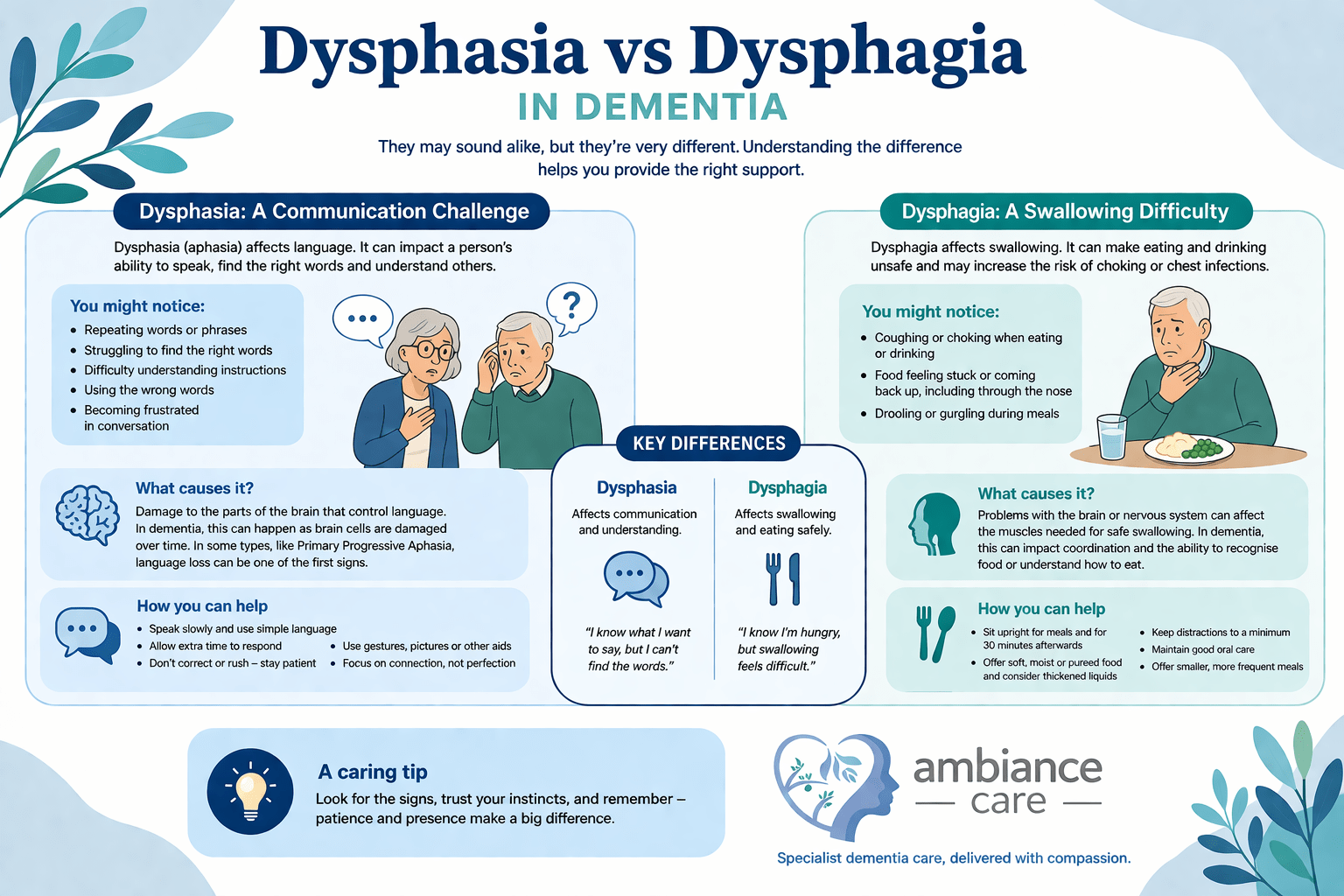
Dysphasia, also known as aphasia, relates to communication. It’s a language disorder that impacts a person’s speech and their understanding. It can be characterised by:
- Repeating words or phrases
- Struggling to find the right words
- Difficulty understanding instructions
- Using the wrong words
- Becoming frustrated during conversation
What causes aphasia/dysphasia?
Aphasia is the result of damage to areas of the brain that govern language. Common causes include stroke, head injuries, brain tumours and conditions like dementia, which cause the brain to become damaged over time.
Dysphasia can affect anyone but it’s more common in people over the age of 65 because the risks of stroke and dementia are higher for this age group.
In individuals with dementia, aphasia can be caused by the buildup of proteins in brain cells that damage and kill neurons. In frontotemporal dementia, cells shrink in areas of the brain responsible for language.
Dysphasia is often a later-stage symptom of dementia but in some specific types of dementia, like Primary Progressive Aphasia, language loss appears as the first symptom as neural networks degenerate.
How to manage dysphasia in dementia
As dementia progresses, you’re likely to notice changes in your loved one’s communication and how able they are to engage. As communication gets harder, an approach rooted in care, compassion, presence and patience becomes essential. The following techniques can help:
- Slow and simple: Speak slowly and use simple language
- Patience: Allow extra time for the person to reply
- Tolerance: Don’t rush the person or correct them
- Animation: Use expressions and gestures
- Assistive aids: Use aids like pictures to help
- Connection is key: Focus on connection rather than results
What is dysphagia?
Dysphagia refers to difficulty swallowing liquids or food. Key symptoms to look out for include:
- Coughing or choking when eating or drinking
- Food feeling stuck in the throat or chest
- Bringing food back up, including through the nose
- Drooling and gurgling when eating or drinking
What causes dysphagia?
Dysphagia tends to be caused by another health condition, often those affecting the nervous system or the brain like dementia, cerebral palsy, stroke and multiple sclerosis.
It’s also more common in people with learning disabilities, cancer, and individuals on certain medications like antipsychotics.
In dementia, dysphagia is caused by damage to the brain, affecting both its ability to coordinate the relevant muscles and to recognise food or understand how to eat it. This loss of ability to automatically know how to chew and swallow can lead people to hold food in their mouths, refuse to eat and chew improperly.
Muscle weakness and physical decline can make moving food to the back of the throat more difficult, and food or drink can enter the airways rather than the oesophagus.
How to manage dysphagia in dementia
Dysphagia can be worrying to witness in loved ones with dementia but there are management and support strategies that reduce risks and promote easier eating and drinking.
- Positioning:Make sure the person is sitting upright at a 90-degree angle during mealtimes and for 30 minutes afterwards.
- Food texture:Food should be soft, moist or pureed. Thick liquids can reduce the risk of choking.
- Environment:Keep the person focused on eating and swallowing by reducing distractions in the immediate environment.
- Oral care:Clean the mouth after meals to remove food residue.
- Routine:Offer smaller, more frequent meals rather than three large meals a day.
As specialists in dementia care, our team looks after clients with dysphasia, dysphagia and sometimes both conditions on a daily basis. If you and your loved one feel you could benefit from specialist dementia care at home in Stockport, South Manchester, East Cheshire or Trafford, get in touch with us for a friendly chat.
Call us on 0161 537 0983, email the team at enquiries@ambiancecare.co.uk or send us an enquiry form and we’ll get back to you promptly.